
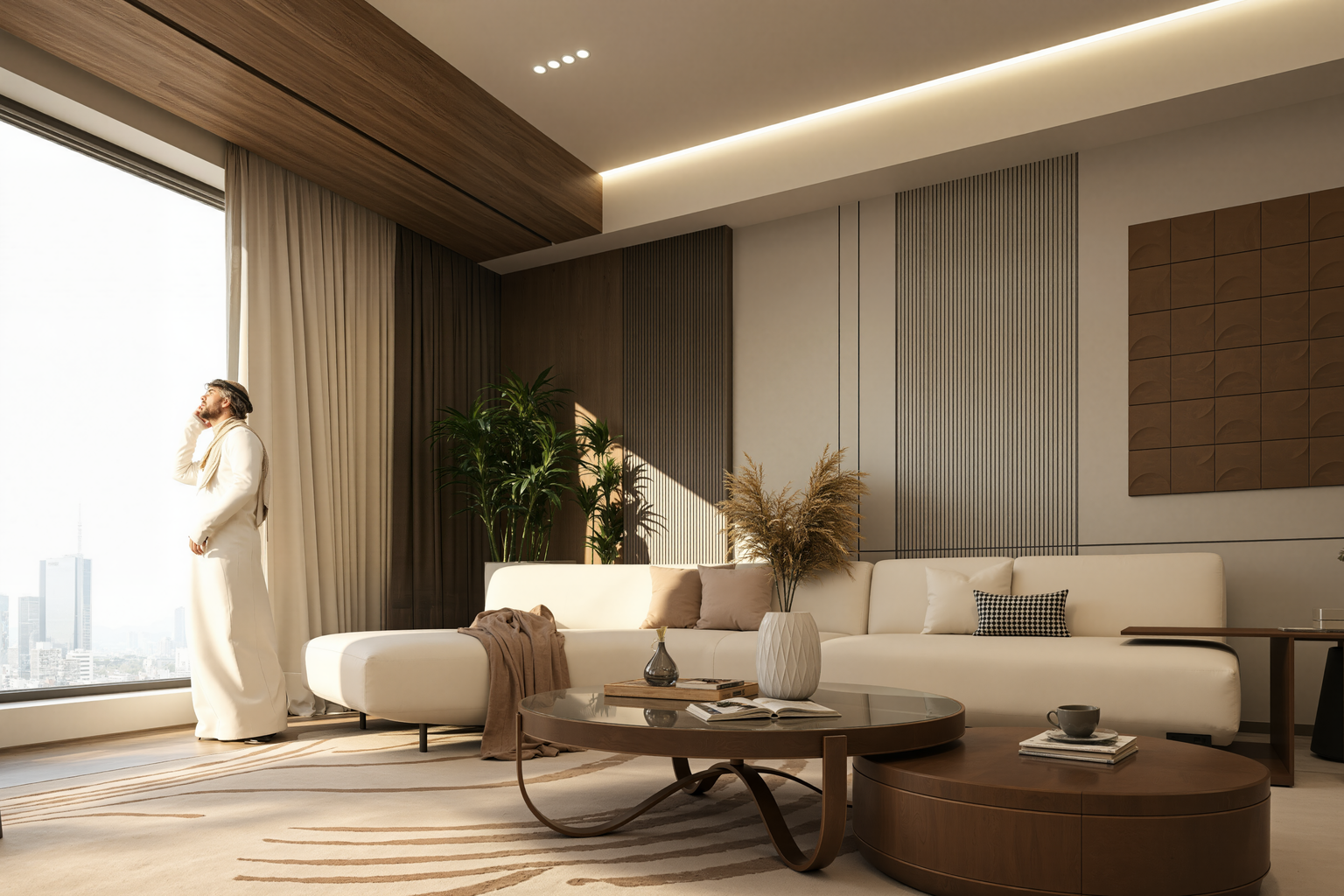
Planning a luxury home is not simply about selecting expensive furniture, marble surfaces or statement lighting. A successful luxury home interior design Abu Dhabi project starts much earlier, with decisions about how the home will be used, how spaces connect, how the local climate affects comfort, and how technology can be integrated without disrupting the architecture.
For villas and large residences, early planning also needs to consider privacy, guest areas, family spaces and cultural requirements such as the majlis. When these elements are resolved before finishes are selected, the result is more cohesive, practical and personal. Here is a step-by-step approach to planning a high-end home interior in Abu Dhabi.
Start With How The Home Will Be Used
Before discussing colours or finishes, establish what the household actually needs from the property. Consider who uses each area, how often guests visit, whether formal entertaining is important and which spaces need greater privacy.
A well-planned luxury home design may separate guest and family circulation, create dedicated entertainment areas and provide private bedroom zones. A majlis may also require its own entrance or circulation route, depending on the family's preferences and cultural requirements.
Think about movement as well. Daily routes between the kitchen, bedrooms, living areas, parking and outdoor spaces should feel logical rather than forcing residents through formal areas unnecessarily.
Plan Cultural And Private Zones Early
Cultural planning should be part of the initial layout rather than an element added during decoration. Traditional requirements can influence room proportions, entrances, circulation and the relationship between public and private areas.
For example, a majlis positioned close to a separate entrance can allow guests to be received without moving through private family spaces. Similarly, service areas can be planned to support entertaining without interrupting the main living environment.
This early zoning gives the interior a stronger foundation and makes later furniture, lighting and decorative decisions much easier.
Check The Property And Approval Requirements
The home's location can influence what changes are practical. Before finalising plans, review the property's existing structure, services, community requirements and any approvals that may apply to proposed modifications.
This is particularly relevant for villas in developments where alterations to façades, layouts, external areas or building services may have specific requirements. A designer should identify these constraints before detailed drawings and procurement begin.
It is much easier to adjust a concept during planning than after custom joinery, lighting or mechanical work has already been ordered.
Make Climate Control Part Of The Design
Abu Dhabi's climate makes cooling performance a major consideration in residential interiors. Large windows, high ceilings and open-plan rooms can create impressive spaces, but they also need to work with the home's cooling system.
During home interior planning, coordinate HVAC requirements with the interior layout, ceiling design, lighting and architectural details. This helps avoid situations where air-conditioning grilles, ducts or service access have to be added as visible afterthoughts.
Window treatments should also be considered early. Automated blackout curtains or blinds can control glare and solar heat while maintaining the clean appearance expected in a premium residence.
Choose Materials For Performance As Well As Appearance
Luxury materials need to suit the way the home will actually be used. Marble and natural stone can create strong architectural statements in entrances, floors and feature walls, while timber and textured finishes can introduce warmth into living and bedroom areas.
The same principle applies to fabrics and upholstery. Velvet, silk and heavy linen can add depth, but their suitability depends on location, maintenance requirements and household use.
When selecting luxury interior finishes, consider:
- Durability and maintenance
- Natural and artificial lighting conditions
- Surface temperature and comfort
- Compatibility between adjoining materials
- Long-term availability for repairs or replacement
The objective is not to use the greatest number of premium materials. It is to use the right materials in the right locations.
Introduce Bespoke Elements Where They Matter
Custom design becomes valuable when standard products cannot achieve the required proportions, storage or visual integration. Bespoke joinery can be designed around architectural dimensions, while custom furniture can solve specific spatial requirements.
Statement elements can include:
- Custom wall panelling and cabinetry
- Bespoke wardrobes and dressing areas
- Integrated media units
- Custom kitchen and bar details
- Feature staircases or screens
- Made-to-measure lighting features
This approach allows bespoke home interiors to feel connected rather than assembled from unrelated pieces.
Integrate Smart Technology Before The Walls Are Finished
Technology works best when it is considered alongside the architecture. Lighting controls, motorised curtains, climate management, security, audio and entertainment systems can all require wiring, sensors, control points or dedicated equipment.
Planning these requirements early allows technology to remain visually discreet. Concealed speakers, automated curtains and integrated lighting controls can support everyday convenience without filling the interior with visible devices.
Skyford's design-led approach brings automation into the interior planning process, allowing smart systems to support the home's lighting, climate, security and entertainment requirements while maintaining the intended aesthetic.
Develop The Design Before Starting Procurement
Once the spatial plan is established, develop the visual direction, materials, furniture, lighting and technology as one coordinated scheme. Three-dimensional visualisations can help homeowners understand proportions, finishes and relationships between rooms before committing to fabrication.
A modern home interior design approach does not necessarily mean creating an entirely minimalist home. Modern detailing can be combined with warm materials, regional influences, classic forms or statement pieces according to the homeowner's preferences.
The important point is consistency. Flooring, wall finishes, joinery, furniture and lighting should contribute to the same overall design language.
Manage Execution With Dedicated Oversight
The final quality of a luxury interior depends heavily on execution. Custom joinery, stone installation, lighting, paintwork and specialist finishes require coordination between multiple trades.
A professional design team can manage drawings, material procurement, fabrication, site coordination and quality checks throughout the project. Regular inspections are especially important for bespoke elements, where small dimensional or finishing errors can affect the final appearance.
This also provides a clear process for resolving site conditions before they become expensive changes.
Conclusion
A well-planned luxury residence brings together lifestyle, architecture, climate performance, cultural requirements, materials and technology before construction or installation begins. Starting with spatial zoning helps establish privacy and circulation, while early coordination of cooling, lighting and automation prevents technical requirements from disrupting the finished interior.
Carefully selected materials then add character without sacrificing practicality, and bespoke joinery can resolve details that standard products cannot. Most importantly, every room should contribute to a consistent design language rather than feeling separately decorated.
For homeowners in Abu Dhabi, this integrated approach can produce a residence that feels refined while remaining comfortable and functional for everyday life.
Speak with Skyford to plan a luxury home interior where design, technology and practical living work together from the start.
Contact UsFrequently Asked Questions
What should I decide before choosing furniture for a luxury villa?
Start with spatial zoning, circulation, room functions, architectural constraints and technology requirements. Furniture should follow the plan rather than determine it.
How can a luxury home stay cool without compromising its design?
Coordinate HVAC, glazing, shading, curtains and ceiling details from the beginning. This allows cooling requirements to be integrated into the architecture instead of added visibly later.
Is a majlis necessary in every Abu Dhabi luxury home?
Not necessarily. Its inclusion depends on the household's cultural preferences, entertaining requirements and desired spatial arrangement. Where included, its access and privacy should be considered during initial planning.
When should smart home technology be introduced?
Ideally during the early design and technical planning stages. Wiring, control systems, lighting, curtains, audio and security can then be coordinated before walls and ceilings are completed.
Why use bespoke elements instead of ready-made furniture?
Custom elements can respond to unusual dimensions, specific storage requirements and the home's architectural character. They can also create a more cohesive result than combining unrelated standard pieces.